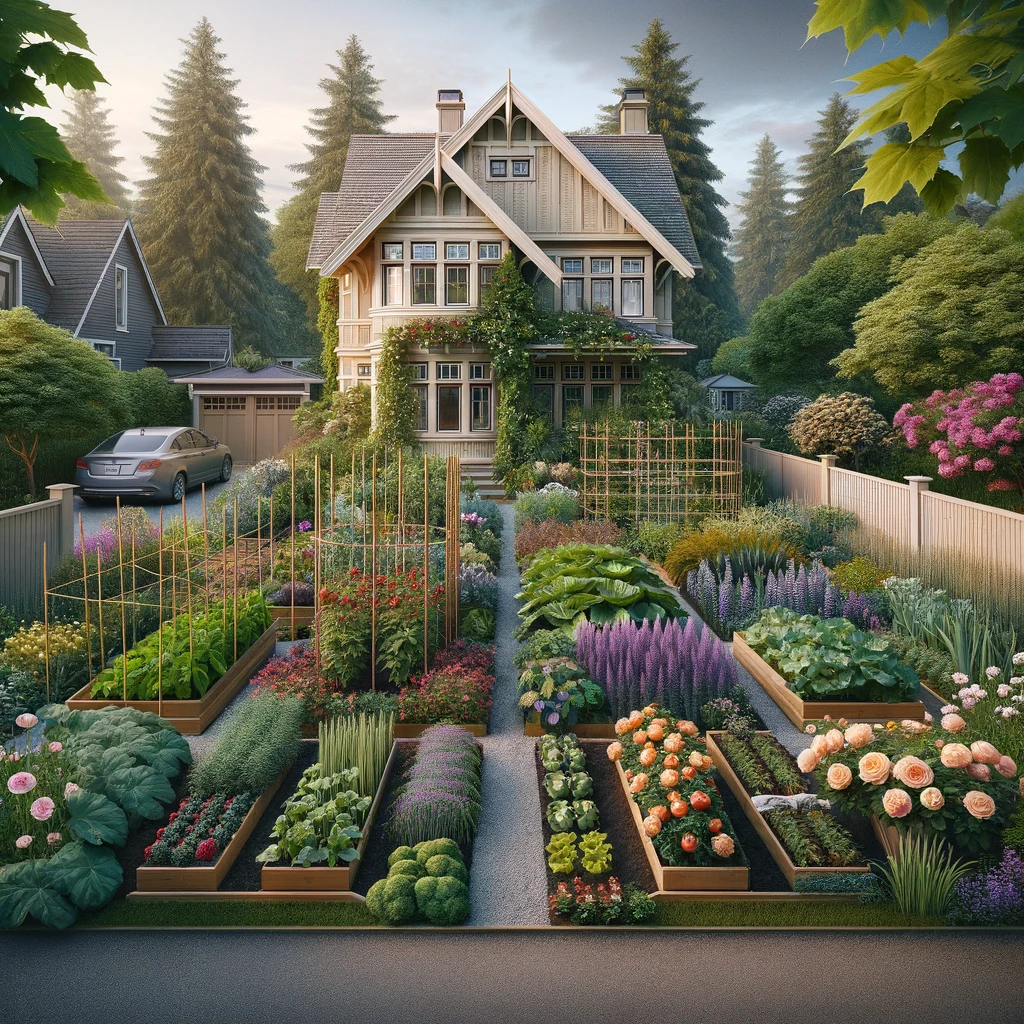
Embrace the fusion of beauty and bounty as we delve into the art of creating an edible landscape that not only pleases the eye but also nourishes the body and soul. In our urban jungles, the concept of a garden that combines the aesthetic elegance of an English garden with the practicality of companion planting is not just a dream—it’s a reality waiting to unfold in your front yard. Let’s explore how to transform your space into a verdant, edible oasis that attracts beneficial insects and admiring glances from neighbors alike. 🌱💐
Why an Edible Landscape?
Edible landscaping, or as I like to call it, “Bloom & Feast”, is the ultimate blend of form and function. By integrating vegetables, fruit trees, bushes, flowers, and other ornamental plants in a structured yet natural layout, you create a living, thriving space that offers fresh produce at your doorstep. It’s not just about growing food; it’s about reimagining the aesthetics of urban spaces, promoting biodiversity, and fostering a deep connection with nature. 🏡🍇🥕
Harvest Meets Harmony: Unveiling the Tapestry of Edible and Cottage Gardens
While both edible and cottage gardens brim with life and vibrancy, they diverge in their core philosophies and visual compositions. A cottage garden is steeped in whimsy and romance, traditionally featuring a dense mix of flowering plants, herbs, and perhaps a smattering of edible elements, all growing together in an informal layout that evokes a sense of nostalgic charm. It’s a garden where aesthetics lead, characterized by its lush, overflowing beds, pathways bordered with blooms, and an emphasis on color and fragrance. The cottage garden is a celebration of abundance and beauty, designed to delight the senses and provide a tranquil retreat.
In contrast, an edible garden is primarily driven by functionality, with its layout and plant selection focused on food production. While beauty is certainly a consideration, the primary goal is to grow a wide range of fruits, vegetables, and herbs in a space that may incorporate companion planting and biodiversity to enhance yield and sustainability. The edible garden is a testament to the gardener’s commitment to harvesting fresh, homegrown produce, meticulously organized to make the most of every season’s offerings.
Despite their differences, the lines between edible and cottage gardens can blur, creating spaces that are both productive and enchanting. Gardeners can weave edible plants into a cottage garden’s tapestry, introducing vegetables with striking foliage or flowers that contribute to the garden’s aesthetic while providing nourishment. Similarly, an edible garden can adopt the cottage garden’s informal design and diverse plantings, making it not only a source of food but also a place of beauty. This fusion approach highlights the versatility of gardening, proving that functional spaces can also be profoundly beautiful, and that the art of gardening is not just in the cultivation of plants but in the creation of a space that feeds both body and soul.
Designing Your Edible Paradise:
- Blocks of Color and Texture: Plan your garden with blocks of color by grouping plants with similar hues. This not only creates a visually appealing landscape but also helps in attracting a variety of beneficial insects. Mix and match leaf textures and plant heights for a dynamic, layered look.
- Companion Planting Magic: Companion planting is the heart of an edible landscape. Pairing certain plants together can enhance growth, deter pests, and ensure pollination. For instance, marigolds repel nematodes and other pests, while basil can improve the flavor of your tomatoes.
- Structural Elements and Folies: Incorporate structures like trellises, pergolas, or arches to add vertical interest and support climbing plants like roses, grapes, or beans. These elements provide focal points and elevate the garden’s architectural beauty.
- Attracting Beneficial Insects: By including a variety of plants, you create a haven for pollinators and beneficial insects. Flowers like lavender, cosmos, and zinnias invite bees and butterflies, while herbs like dill and fennel attract ladybugs that control pests.
Your front garden can be more than just a patch of grass. With thoughtful planning and a dash of creativity, it can transform into a vibrant, edible landscape that feeds both body and spirit. Embrace this sustainable, eco-friendly approach to gardening that marries productivity with aesthetic appeal, and watch as your “Bloom & Feast” garden becomes the talk of the town. 🌺🍽️
Please take note :
As we’ve journeyed together through the inspiring possibilities of creating an edible landscape, it’s important to note that, at this moment, the exact representation of this gardening style, as envisioned for my own front yard this summer, remains just beyond the horizon. The images and descriptions shared within this post serve as a blueprint, a source of inspiration drawn from the rich tapestry of nature and human ingenuity. While I eagerly anticipate bringing this vision to life in the coming months, I invite you to imagine the beauty and bounty that such a garden promises. Stay tuned for updates and real-life imagery as I embark on this transformative gardening adventure. Together, let’s grow not just gardens, but communities, rich in diversity, sustainability, and joy.

Leave a Reply